ArtMotri Journal
Stay with art
Art, architecture and the slower rhythm of a hotel stay.
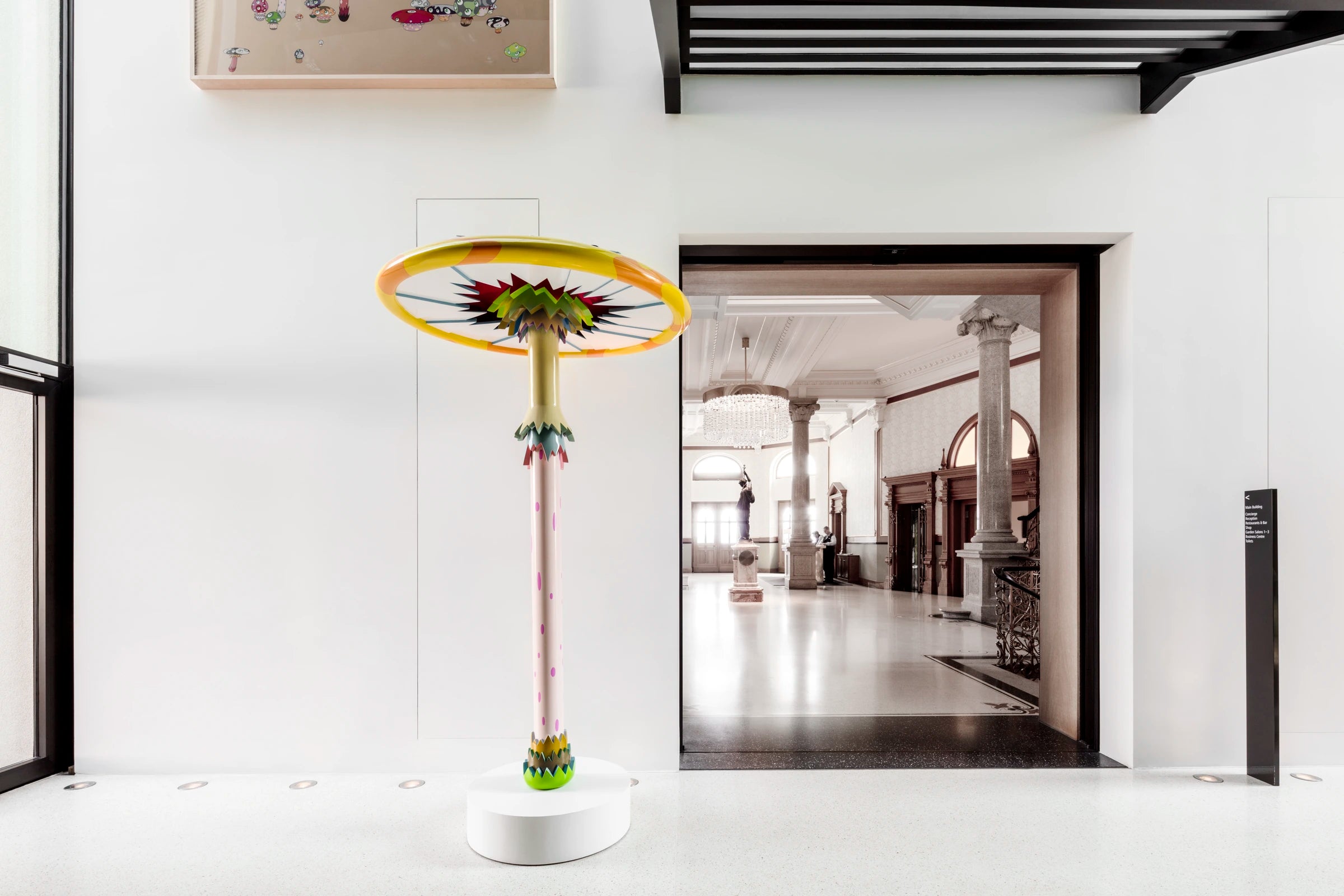
Art can become part of the route through a place: the object noticed on arrival, a reflection caught in a corridor, the sculpture passed again the next morning. A hotel gives these encounters a particular rhythm. Looking can happen between other activities, with time to return and discover how much a work depends on its surroundings.
The Dolder Grand in Zurich and Benesse House on Naoshima offer distinct settings for this experience. In the opening photograph, Takashi Murakami’s Troll’s Umbrella (2002) rises from a white pedestal, its bright circular canopy interrupting the ordered interior. That small disruption suggests the question running through these spaces: how can art change our attention to a room we are simply moving through?
A museum to stay in
Benesse House opened on Naoshima in 1992, bringing a museum and hotel together in a building designed by Tadao Ando. Its position above the Seto Inland Sea makes the surrounding landscape part of the encounter.
Large openings carry light and distant views into the building. The collection extends through galleries and other interior spaces, then continues towards the shore and nearby woodland. Some works were developed for particular locations chosen by the artists. Walking between them involves changes in scale, enclosure and brightness; an artwork may draw attention to the architecture, while a window redirects it towards the sea.
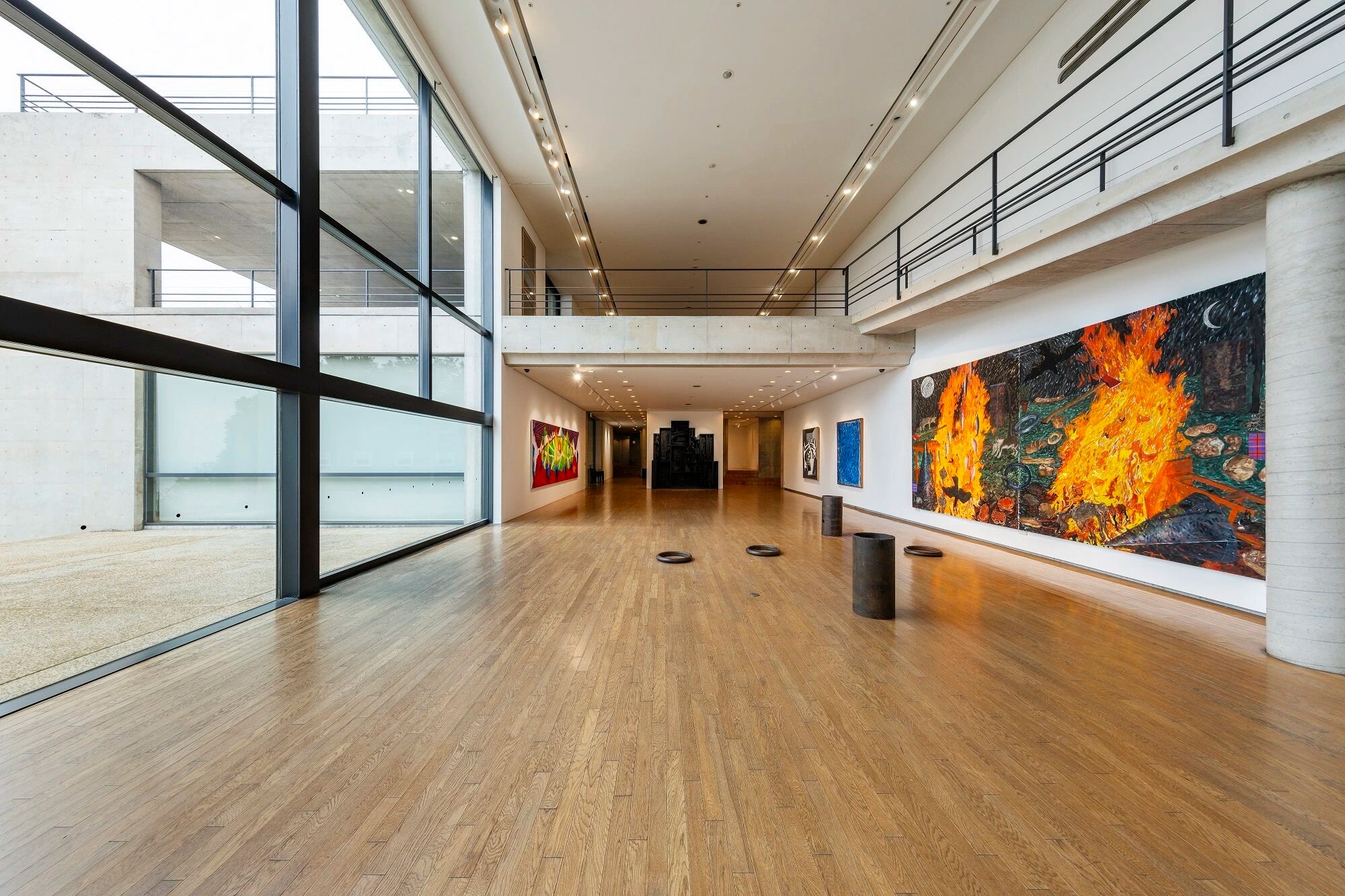
The gallery photograph offers a quieter version of that relationship. Timber flooring, broad walls and the passage into another room establish a measured sequence. The eye can move from a work to the space around it without a sharp visual break. Within a museum and hotel, returning along a familiar route gives these intervals renewed importance: a view that first registered as background can become the reason to stop.
A room reflected
At The Dolder Grand, art is distributed through a hotel that combines its historic building with additions by Foster + Partners. The collection moves across these different architectural settings, accompanying everyday passages through the property.
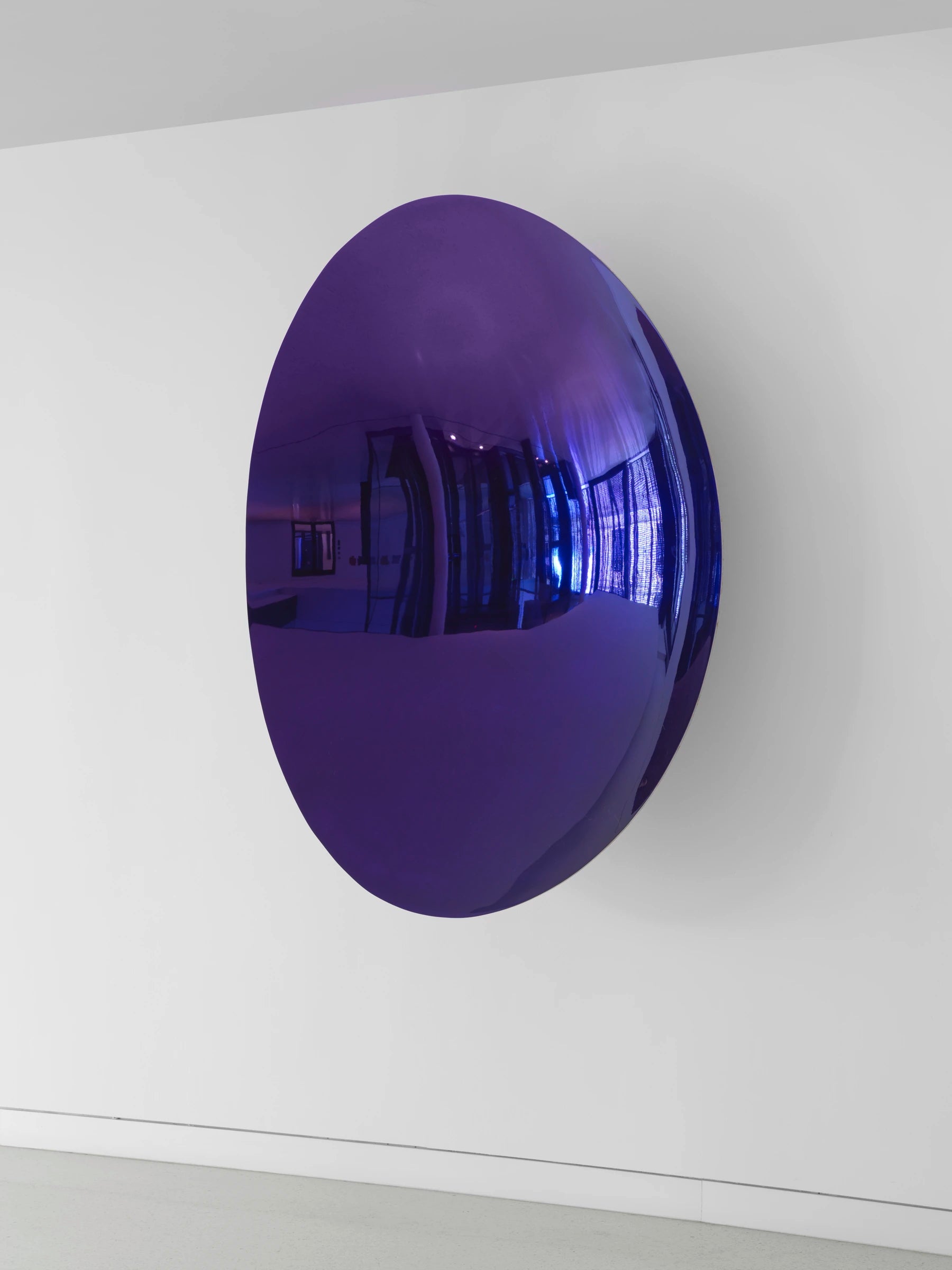
Anish Kapoor’s Untitled (2001) draws the surrounding interior into its curved, lacquered stainless-steel surface. The purple colour has a strong presence on the pale wall, while the reflected corridor appears to turn inward. Architecture that normally tells us where we are becomes difficult to measure. The object occupies a fixed position, yet the image it holds depends on the position of the person looking.
Compare this concentration of reflected space with the outward spread of Murakami’s Troll’s Umbrella. One gathers the room into a coloured surface; the other extends a playful silhouette into it. Their different effects make a useful distinction within a collection. Art can alter how an interior feels through reflection, proportion and shape, as well as through the subject it depicts. A corridor becomes a place to test those differences, with another angle available on the return journey.
Sea and shadow
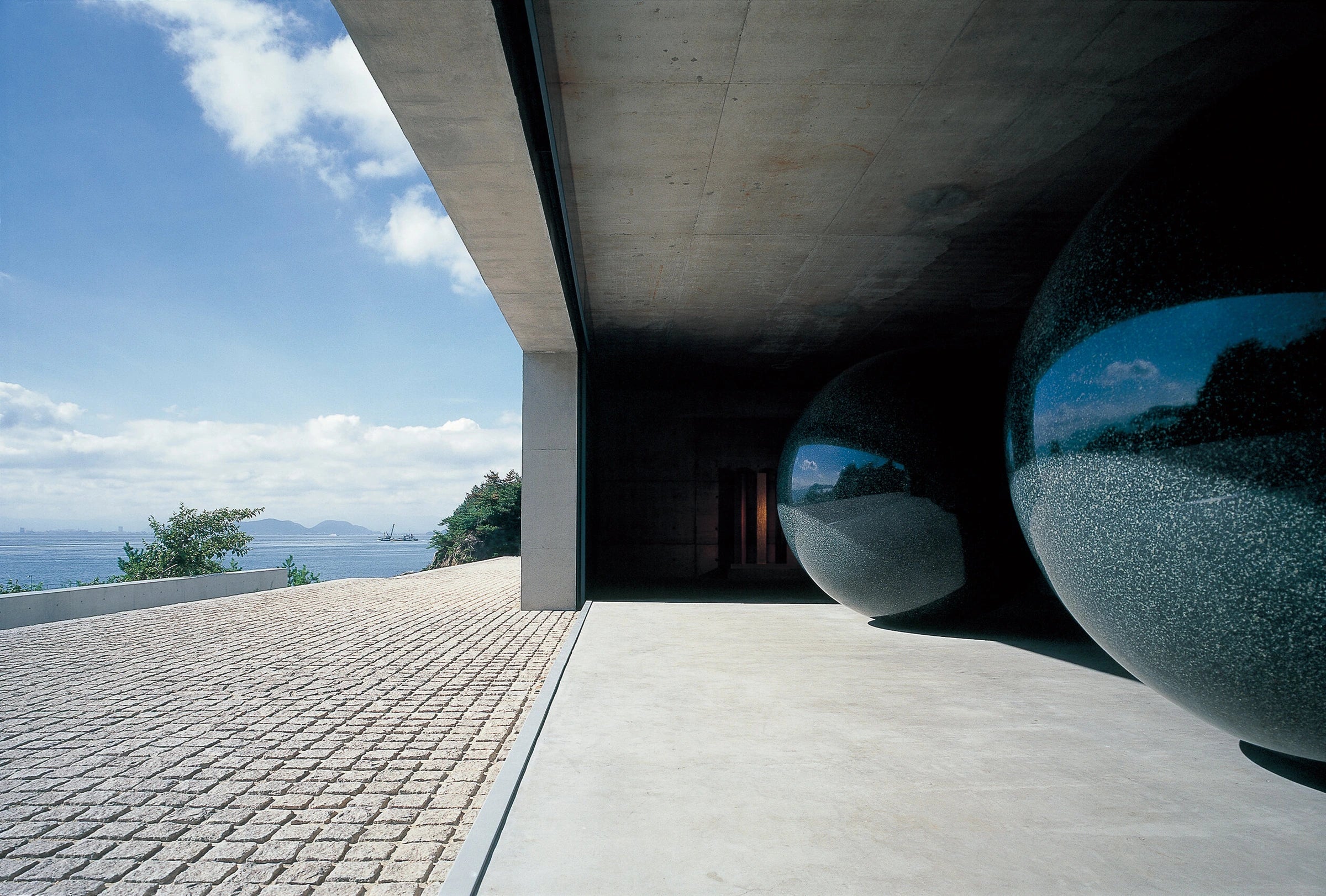
Walter De Maria’s Seen/Unseen Known/Unknown (2000) occupies the Seaside Gallery at Benesse House Museum. Two dark granite spheres sit within a sheltered space, with gilded wooden forms arranged to either side.
The artist developed the installation in close relation to this site. Benesse’s account describes repeated visits and detailed consideration of the objects and their setting before completion in 2000. The polished stone reflects the view beyond the gallery, while the roof and concrete surfaces hold an area of deep shade. Bright sea and enclosed darkness remain visible together, giving the simple geometric forms a shifting context.
No single position reveals every part of the installation at once. Moving changes what appears around the spheres and what is reflected across them. This makes the act of looking both physical and patient: the work becomes clearer through a sequence of views. A photograph records one arrangement of light, objects and coastline. The installation allows those relationships to keep changing with the day, the season and the viewer’s approach.
These settings give art a place within repeated experience. Familiarity can sharpen attention: the curved surface, the threshold and the reflection become easier to notice after the first encounter. The lasting interest lies in that exchange between an artwork and the life of the space around it. A second look can begin with something as ordinary as taking the same route again.